Top 10 countries doing the most to tackle plastic pollution
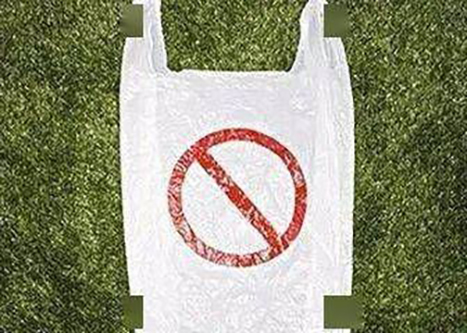

Plastic takes between 500 and 1,000 years to completely degrade. As a result,
ALL of the plastic that has ever been manufactured or used by us can still be found in some form on our planet.
Think of it this way: every toothbrush you have ever used is still out there – somewhere.
A shocking 40 per cent of plastic is used only once before being discarded.And only
9 per cent of plastic has EVER been recycled. It’s no wonder then that we have now reached a crisis point.
Of the 300 million tonnes of plastic waste the world produces every year
(the same as the weight of the entire world population),eight million tonnes end up in the oceans,
killing marine life and entering the human food chain.Plastic also accelerates climate change
by emitting greenhouse gases at every stage of its lifecycle.In the UK, Prime Minster Theresa May
pledged to phase out all plastic which is not“absolutely essential” by 2042.But around the world,
countries are taking far more drastic measures to hold back the rising tide of plastic pollution.

Here are our top 10:
1.Canada
Canada is to ban all single-use plastics by 2021 in the most ambitious move yet
by any country in the war against plastic.Canada, which has the world’s longest
coastline at 151,019 miles and a quarter of the world’s fresh water,
currently recycles less than 10 percent of its disposable plastics. Without a drastic change,
it would be on track to throw away $11 billion (£8.6 billion) worth of disposable plastic by 2030.
Announcing the decision earlier this month, Prime Minister Justin Trudeau said: “To be honest,
as a dad it is tough trying to explain this to my kids. How do you explain dead whales
washing up on beaches across the world, their stomachs jam-packed with plastic bags?
“How do I tell them that against all odds, you will find plastic at the very deepest point in the Pacific Ocean?”
He added: “This will be a big step but we know we can do this for 2021.”
2.India
India shocked the world in 2017 when it announced it would eliminate all single-use plastic by 2022.
With a population of 1.35 billion people, the world’s fastest-growing country is responsible for 500,000
tonnes of mismanaged plastic waste reaching the ocean every year.Around eighty percent of plastic in India
is discarded as waste,and more than forty percent of this goes uncollected.
By the start of this year, more than half of India’s 29 states and seven territories
had crafted new legislation to tackle single-use plastics. Bans on thin plastic shopping bags,
which are the hardest to recycle, are the most common regulations.State government officials are also
working to reduce the manufacturing of plastic by shutting down factories that produce it.
The success of the bans has, however, been mixed. The types of banned products vary from state to state
and both consumers and retailers say there has been confusion over what’s banned and what’s exempted.
There has also been a lack of consistent enforcement – even politicians
have been seen publicly using plastic-coated cups.
3.Rwanda
Rwanda became the world’s first ‘plastic-free’ nation in 2009,
10 years after it introduced a ban on all plastic bags
and plastic packaging. Anyone who is caught with a plastic item faces a jail sentence of up to six months.
On entering a border post into the country, vehicles are searched and any plastic bags or
packaging are confiscated before they enter the country.
4.Kenya
Set in August 2017, Kenya’s plastic bag ban is widely regarded as the strictest in the world.
Anyone found producing, selling – or even just carrying – a plastic bag faces up to
four years’ imprisonment,or a fine of up to $40,000 (£31,000). The only exemption is
for manufacturers who use polythene to wrap products.The ban was set after Kenyans were
found to be using 24 million plastic bags each month.The United Nations’
Environment Programme discovered that cows slaughtered in Nairobi regularly
had up to 20 bags in their stomachs, sparking fears over plastic contamination in the food chain.
The ban appears to be working with a dramatic decline in the number of bags littering
Kenya’s shanty towns – particularly “flying toilets”, where residents defecate in a plastic bag,
tie it up and then throw it on to the tin roofs.
5.Germany
In Germany, a deposit return scheme was introduced in 2003 where customers
pay a 25 cent (22 pence) deposit on every bottle of soft or alcoholic drink.
This excludes milk, baby products and medical liquids.
The move has seen almost 99 per cent of the country’s plastic bottles returned for recycling.
Since the introduction of the scheme, an estimated 1.2 billion containers have been diverted from landfill.
Glass bottles are also subject to the scheme and typically have a deposit of between eight
and 15 cents (seven to 13 pence) added to their cost. Once they are collected,
they are typically sent back to manufacturers for cleaning and refilling.
6.Norway
Norway is another nation to have seen success with a deposit return scheme.
An impressive 95 per cent of the nation’s plastic bottles have been returned
for recycling since the scheme began in 2014.The Norwegian government has set up
more than 3,500 reverse vending machines and 11,500 registered collection points
across the nation to encourage residents to recycle.This improvement in recycling
infrastructure was paid for by packaging manufacturers,with the government taxing
firms for producing single-use packaging.They are also made to cover the cost of
plastic waste collection and recycling.
7.France
In 2016, France became the first country in the world to ban the manufacture
and sale of single-use plastic cups,cutlery, plates, and takeaway food boxes.
The law requires all disposable tableware to be made from 50 per cent bio-sourced
materials that can be composted at home by January 2020.This rises to 60 per cent by 2025.
The legislation was passed after statistics from the French Association of Health
and Environment revealed that only one per cent of the 4.73 billion single-use
plastic cups thrown away each year in France were recycled.
France also banned shops from distributing plastic bags in 2016 in a bid to reduce
the 17 billion which were used nationwide annually. Of those 17 billion bags,
eight billion were estimated to be littered annually before the ban.
Most shops now offer either paper bags or reusable plastic alternatives, at a cost of a few cents each,
and encourage customers to reuse their bags.
8.Chile
Last year Chile became the first South American nation to ban plastic bags.
While the original bill was meant to only cover the Patagonian region in the south of the country,
it was extended to the entire nation in May this year. Bin liners will be excluded from the ban,
while small businesses will have until May 2020 to eliminate plastic bags.
The Association of Plastic Manufacturers (Asiplas) estimated that Chile was using more than
3.4 billion plastic bags a year – the equivalent of each resident using more than 200 annually.
The ban has seen bags replaced with sustainable alternatives such as paper, cotton or sugarcane variants.
9.Sweden
Known as one of the world’s best recycling nations, Sweden is following the policy of ‘No Plastic Ban,
Instead More Plastic Recycling.’ The reason for this is that Sweden has the world’s best recycling system.
Most of Sweden’s rubbish gets burned in incinerators. The system is so good that less than
one percent of Sweden’s household waste goes into landfill.
10.Peru
Single-use plastics are banned in Peru’s 76 natural and cultural protected areas,
from Machu Picchu to Manu to Huascarán, as well as its national museums.
The ban was announced as a Supreme Decree by Peru’s Environment Minister Fabiola Muñoz,
and signed by President Martín Vizcarra, in November last year.
At world-famous Machu Picchu, tourists were producing an average of 14 tons of solid waste per day,
much of it plastic bottles and other single-use packaging.
Peru’s Congress has also passed a law to phase out single-use plastic bags across the country by 2021.
According to Peru’s Environment Ministry, the country uses 947,000 tons of plastic each year,
while 75 percent is thrown out and only 0.3 percent is recycled.