How to Develop a Custom Plastic Product from Scratch: A Buyer's Complete Guide
From Concept Sketch to First Production Run: A Step-by-Step Guide for Custom Plastic Products
Bringing a custom plastic product from a rough sketch to a tangible, market-ready item is one of the most rewarding journeys for a startup. However, the path to mass production is rarely a straight line; it is a highly iterative process that requires balancing design aesthetics with manufacturing realities. For first-time brand owners, navigating this journey without a map can lead to blown budgets and missed launch dates. This comprehensive guide breaks down the critical phases, realistic timelines, and cost benchmarks required to successfully partner with an injection molding factory.
Phase 1: Concept Refinement and Design for Manufacturability (DFM)
Your initial sketch proves the concept, but it cannot be molded directly. The first critical step is translating your idea into a 3D CAD model optimized for injection molding. This phase involves Design for Manufacturability (DFM) analysis, where engineers evaluate wall thickness, draft angles, and parting lines to ensure the plastic will flow correctly and eject smoothly. Rushing this stage is the most common cause of downstream failures. You must also conduct a comprehensive product strategy review to distinguish between absolute necessities and "nice-to-have" features, aligning your design with budget constraints and target pricing.
Timeline Estimate: 2 to 4 weeks. Cost Benchmark: $2,000 to $10,000+ for professional industrial design, CAD modeling, and DFM engineering.
Phase 2: Prototyping and Functional Validation
Before committing tens of thousands of dollars to steel, you must validate your product using 3D printing or CNC machining. These functional prototypes allow you to test form, fit, and basic mechanics in the real world. This stage is about identifying fundamental flaws in user interaction or assembly. Remember, a 3D-printed prototype proves the concept works, but it does not prove it can be efficiently manufactured at scale.
Timeline Estimate: 1 to 3 weeks. Cost Benchmark: $500 to $3,000, depending on the number of iterations and materials required.
Phase 3: Custom Tooling and Mold Fabrication
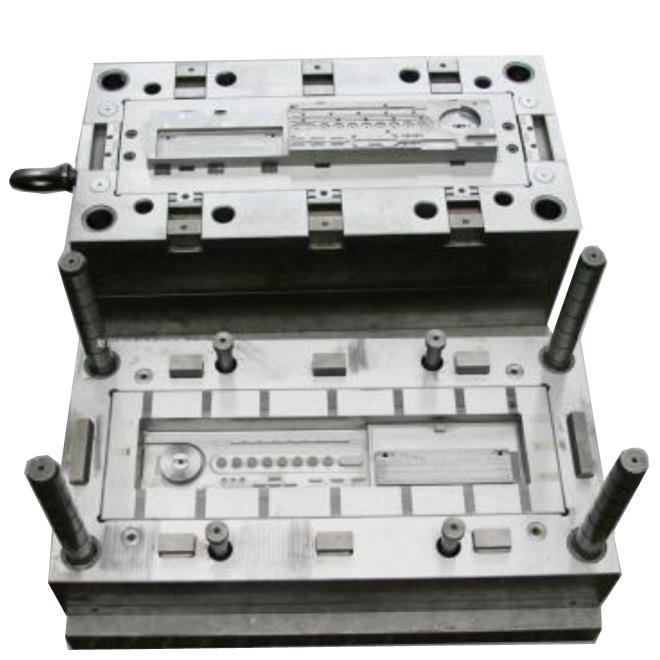
This is the most capital-intensive and time-consuming phase. Once the design is locked, the factory will begin machining the custom steel mold. This involves precision CNC machining, Electrical Discharge Machining (EDM) for complex textures or deep ribs, and meticulous assembly. The choice of steel (e.g., aluminum for prototypes vs. hardened H13 steel for mass production) will heavily influence both the cost and the mold's lifespan.
Timeline Estimate: 6 to 10 weeks for standard molds; 12+ weeks for complex, multi-cavity, or high-precision tools. Cost Benchmark: $5,000 to $25,000+ for a standard production mold. Highly complex molds can exceed $50,000.
Phase 4: Mold Trials (T0, T1, T2) and Iteration
When the mold is assembled, it undergoes a series of test shots. The T0 trial is the first run, aimed at verifying basic mold function and identifying major defects like short shots or severe warpage. Subsequent trials (T1, T2) involve tweaking injection parameters, adjusting gate sizes, or modifying steel to perfect the part's dimensions and cosmetic appearance. This iterative feedback loop is essential for achieving a production-ready part.
Timeline Estimate: 2 to 4 weeks (allowing for mold modifications between trials). Cost Benchmark: $1,000 to $3,000 for trial machine time, raw materials, and engineering labor.
Phase 5: Engineering Build (EB) and Pre-Production (PP)
Before full-scale mass production, you must run a small-batch Engineering Build (EB) and Pre-Production (PP) run. This stage uses the finalized mold and production-grade materials to validate the assembly line, test packaging, and establish baseline Quality Control (QC) standards. The goal is to expose any hidden issues that only appear when producing hundreds of units rather than dozens. If your product requires regulatory certifications (e.g., FCC, CE, FDA), this is typically when those tests are conducted using PP samples.
Timeline Estimate: 3 to 6 weeks. Cost Benchmark: $2,000 to $5,000+ for small-batch labor, plus $5,000 to $15,000+ for third-party certification testing.
Phase 6: Mass Production (MP) and Quality Control
With a validated process and approved PP samples, you are ready for Mass Production. This phase focuses on maintaining consistency across thousands of units. A robust QC plan—including in-process inspections and final random inspections (AQL standards)—is non-negotiable. Logistics planning, including custom packaging design and freight forwarding, should be finalized during this window to ensure a smooth transition from the factory floor to your warehouse.
Timeline Estimate: 3 to 6 weeks for the initial production run. Cost Benchmark: Unit price multiplied by your Minimum Order Quantity (MOQ), plus $2,000 to $5,000 for third-party QC inspections and packaging tooling.
Strategic Takeaways for Startups
From concept to first production run, expect a realistic timeline of 4 to 8 months and an initial capital outlay ranging from $20,000 to $50,000+, depending on product complexity. The key to success is treating your manufacturing partner as an extension of your team. Invest heavily in the early DFM and prototyping phases, maintain a contingency budget of at least 15% for unforeseen mold modifications, and never compromise on quality validation before scaling. By respecting the physics of plastic manufacturing, startups can transform a simple sketch into a scalable, profitable product.