Company News and Updates
How to clean and disinfect wheat straw tableware
📅 2020-10-19
👁 6143 views
🏷 Company News and Updates
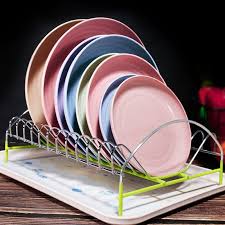
Tableware is what we must use when we eat. There are many kinds of materials in the market,
and wheat straw tableware is one of them. The tableware must be cleaned in time after use,
and it must be disinfected regularly to ensure the cleanliness of the tableware and better protect our health.
So, how to clean and disinfect wheat straw tableware? Let me know about it with me.
How to clean wheat straw tableware for the first time?
The newly bought wheat straw tableware looks very clean. In fact, it is inevitable that there will be bacteria
and floating dust on the tableware that we cannot see with the naked eye.
Because wheat straw tableware is in contact with many machines during production,
and it is in contact with human hands during packaging, bacteria and dust will inevitably be on the tableware,
so it must be cleaned before the first use. It is more safe and sanitary. The cleaning method is as follows:
1. After getting the new wheat straw tableware, we must first rinse the tableware with
clean water to remove the floating dust on the surface of the tableware.
2. Then add a few drops of detergent into the water, and then wash the tableware with detergent,
and then rinse with plenty of water.
3. Prepare a pot of boiling water, wash the cleaned tableware with boiling water,
scald it again, perform sterilization treatment, and then put it on the dish rack to drain the water,
and then you can use it with confidence.
How to clean wheat straw meal with oily dirt?
1. Wash with dish soap
After the wheat straw tableware is used, if there is a slight oil stain, you can directly wash it with detergent,
and then rinse it with plenty of water to remove the oil stain.
2. Wash with baking soda
If there is a lot of oil on the wheat straw tableware, we can use baking soda to clean it.
Prepare hot water of about 50 degrees, then add an appropriate amount of baking soda to the hot water,
and then put the wheat straw tableware into the baking soda water to soak for 15-30 minutes.
After the time is up, cleaning is carried out, and baking soda can also effectively decontaminate.
When cleaning, you can also add some detergent, the effect will be better.
After cleaning, be sure to rinse with clean water to avoid the detergent and baking soda remaining on the dishes.
3. Wash with rice water
Speaking of rice-washing water, many people throw it away after washing rice.
In fact, rice-washing water has many functions, because rice-washing water contains minerals
and trace elements, which can not only be used to water flowers and provide flowers and plants.
Nutrition, also has the function of removing oil and odor. Therefore,
when the wheat straw tableware has oil stains, we can directly wash it with rice water,
and then scald it with hot water again, the tableware will become very clean.
4. Wash with loofah
Loofah is a very decontaminating natural rag, which can clean the oil on the tableware very well.
Generally, when the oil is not very serious, just use the loofah to scrub the tableware,
the oil on it will be quickly removed, and the loofah is also natural and environmentally friendly,
and it will not scratch the tableware.
How to sterilize wheat straw tableware?
The wheat straw tableware is made of wheat straw and food-grade PP material after high temperature
and hot pressing. The material is healthy and environmentally friendly, with high density,
not easy to breed bacteria, mildew and drop resistance, and can be at minus 20 degrees to 120 degrees.
Use within the temperature. Therefore, it is very convenient to disinfect, and there are many disinfection methods.
1. Boiled water, scalded and disinfected
Wheat straw tableware can be used at a temperature between minus 20 degrees and 120 degrees,
so after each use, after washing it, you can directly scald it with boiling water,
which can play a high-temperature sterilization effect.
But wheat straw tableware cannot be cooked in boiling water,
because the cooking temperature is between 100 degrees and 200 degrees,
which can easily exceed 120 degrees, and it is easy to decompose the wheat straw fiber.
2. Disinfection in the disinfection cabinet
Wheat straw tableware can be disinfected with the ultraviolet rays and ozone of the disinfection cabinet,
but cannot be disinfected with the high temperature layer of the disinfection cabinet,
and the wheat straw tableware cannot be exposed to the sun for disinfection,
which will accelerate the aging of the tableware and shorten the service life of the tableware .
3. Salt water disinfection
Prepare a basin of water, add an appropriate amount of salt to the water,
keep the concentration of the salt water above 15%,
and then put the wheat straw tableware in the salt water and soak for half an hour.
Salt water can play a very good role in sterilization and disinfection. After soaking it,
scald it with boiling water again for better disinfection effect.
In short, the cleaning and disinfection methods of wheat straw tableware
are basically the same as the ceramic tableware we usually use. However,
wheat straw tableware is not resistant to high temperatures and cannot be cooked in boiling water,
nor sterilized in a high-temperature disinfection cabinet, let alone baked and sterilized in the oven. .
In normal use, as long as it is cleaned in time, and often scalded with hot water,
and soaked in salt water, it is a very good disinfection method.