New Trends in Environmental Protection
Custom PP Coffee Grounds Cup Manufacturer | KANGHAO
📅 2026-11-20
👁 9 views
🏷 New Trends in Environmental Protection
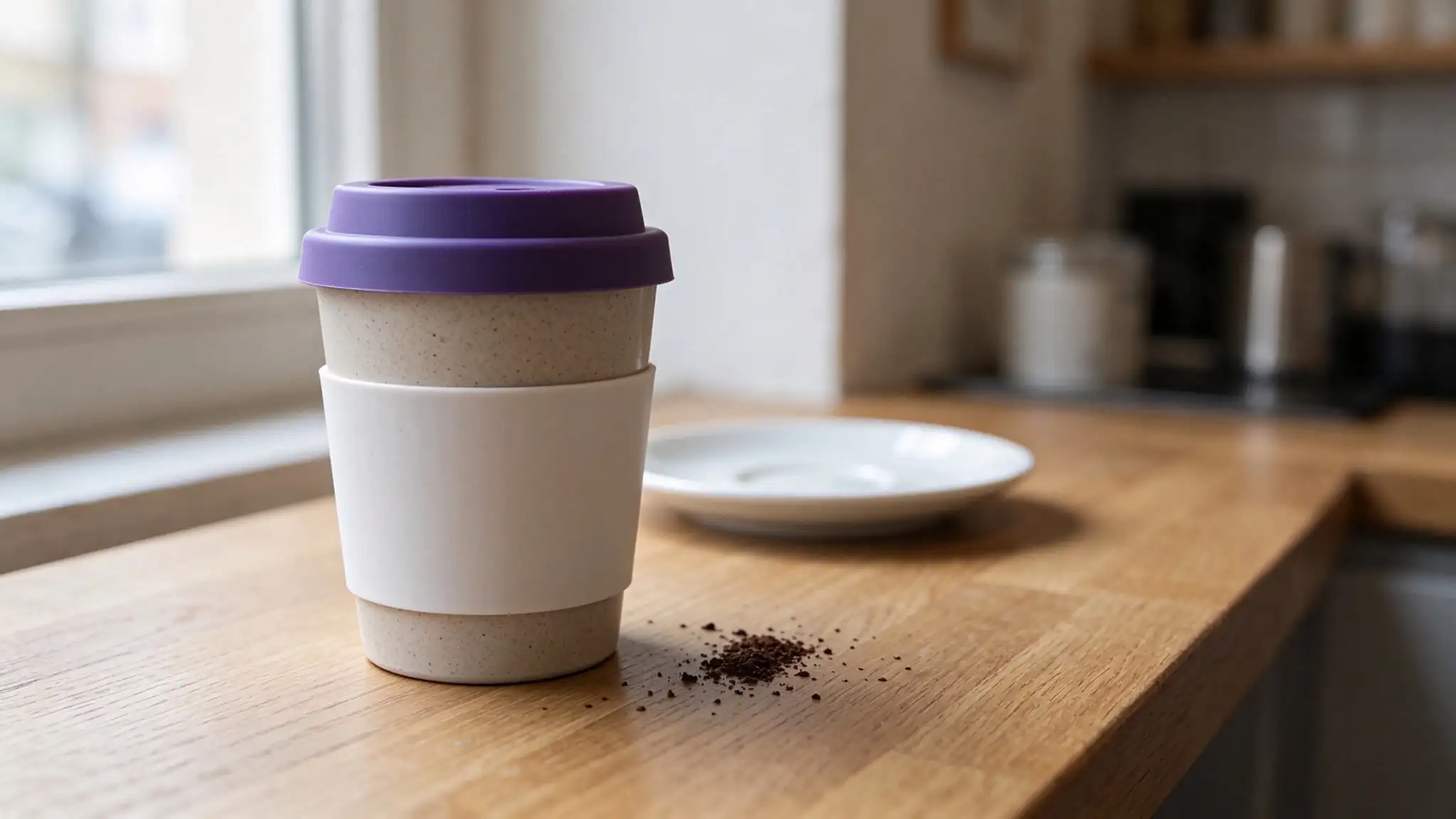
A PP coffee grounds cup is a reusable drink cup whose body is injection-moulded from a polypropylene compound blended with spent coffee grounds. For buyers, the practical questions are always the same: does the material actually hold up to daily use, what can be printed on it, what certifications come with it, and what does a first order cost in time and money. This guide answers those questions from the factory side, based on how KANGHAO (深圳市康濠实业有限公司) actually builds these cups for café chains, promotional distributors and private-label brands.
If you are sourcing a custom reusable coffee cup and want a supplier who can quote, sample and produce without a chain of intermediaries, the sections below double as a specification checklist you can send to any manufacturer for comparison.
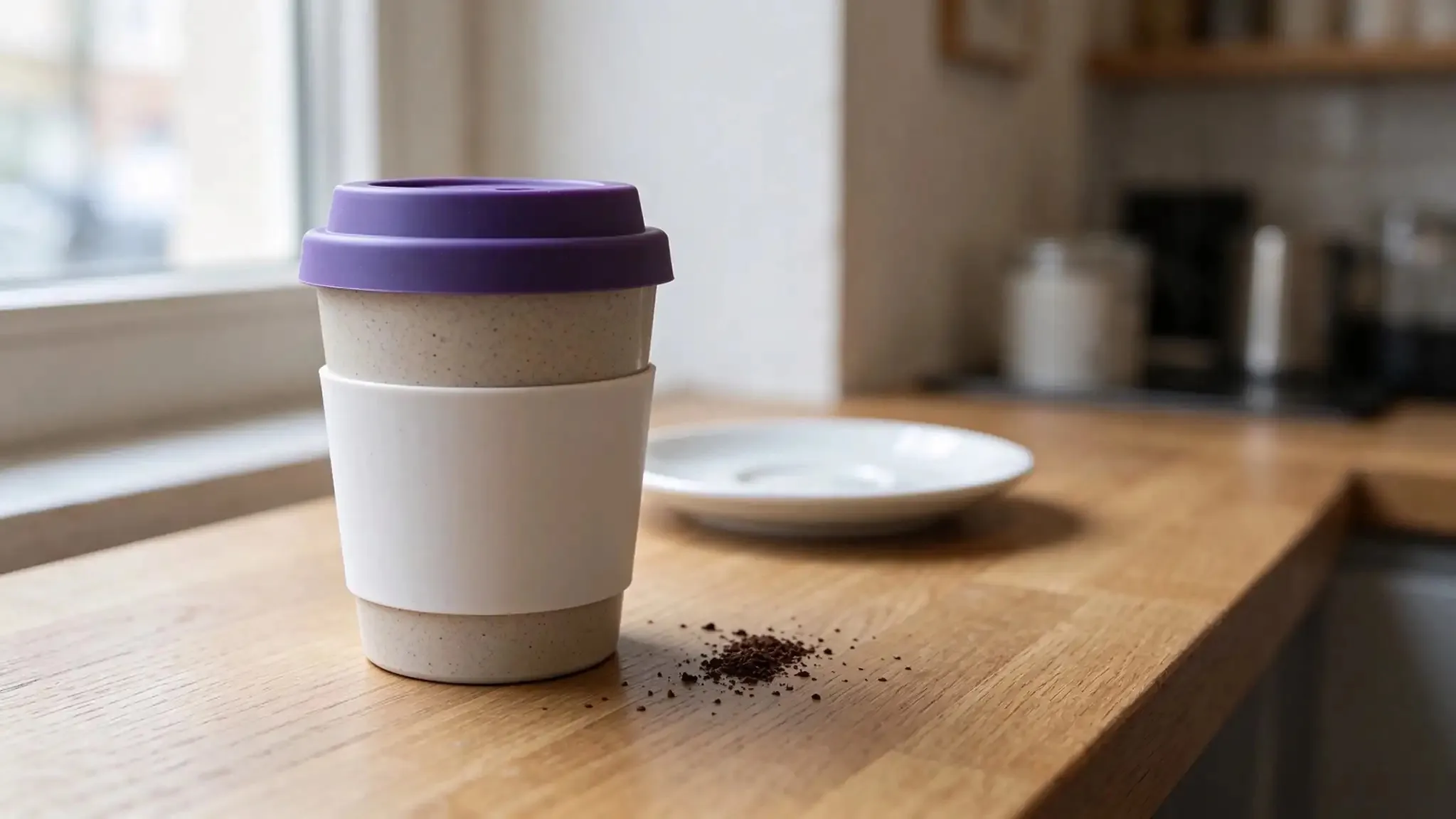
Mechanically, the compound behaves like a modified PP. It is lightweight, tough enough for daily commuting, resistant to the temperatures of hot coffee served at 85–95°C, and dimensionally stable enough that the lid thread does not loosen after hundreds of open-close cycles. The cup is a rigid reusable product, not a single-use item, and it is designed to be washed and refilled rather than discarded after one drink.
Two structural decisions separate a usable cup from a promotional giveaway. The first is wall thickness: below roughly 1.8 mm the cup feels hollow and the coffee cools too quickly. The second is the lid interface — a silicone-seated lid on a machined PP rim is what keeps the cup splash-resistant in a bag, and it is the part most often compromised when a buyer pushes unit cost down.
It displaces virgin polymer. Every kilogram of coffee grounds blended into the compound replaces a kilogram of petroleum-based plastic. At a 20% loading, a 350 ml cup body carries roughly one-fifth less virgin PP than an all-plastic equivalent of the same dimensions.
It reuses a waste stream locally. Grounds are collected, dried to a low moisture content and milled to a consistent particle size before compounding. Moisture control matters: residual water causes splay marks and weak weld lines in the moulding, which is why drying is the step that separates a stable production run from a batch of cosmetically inconsistent cups.
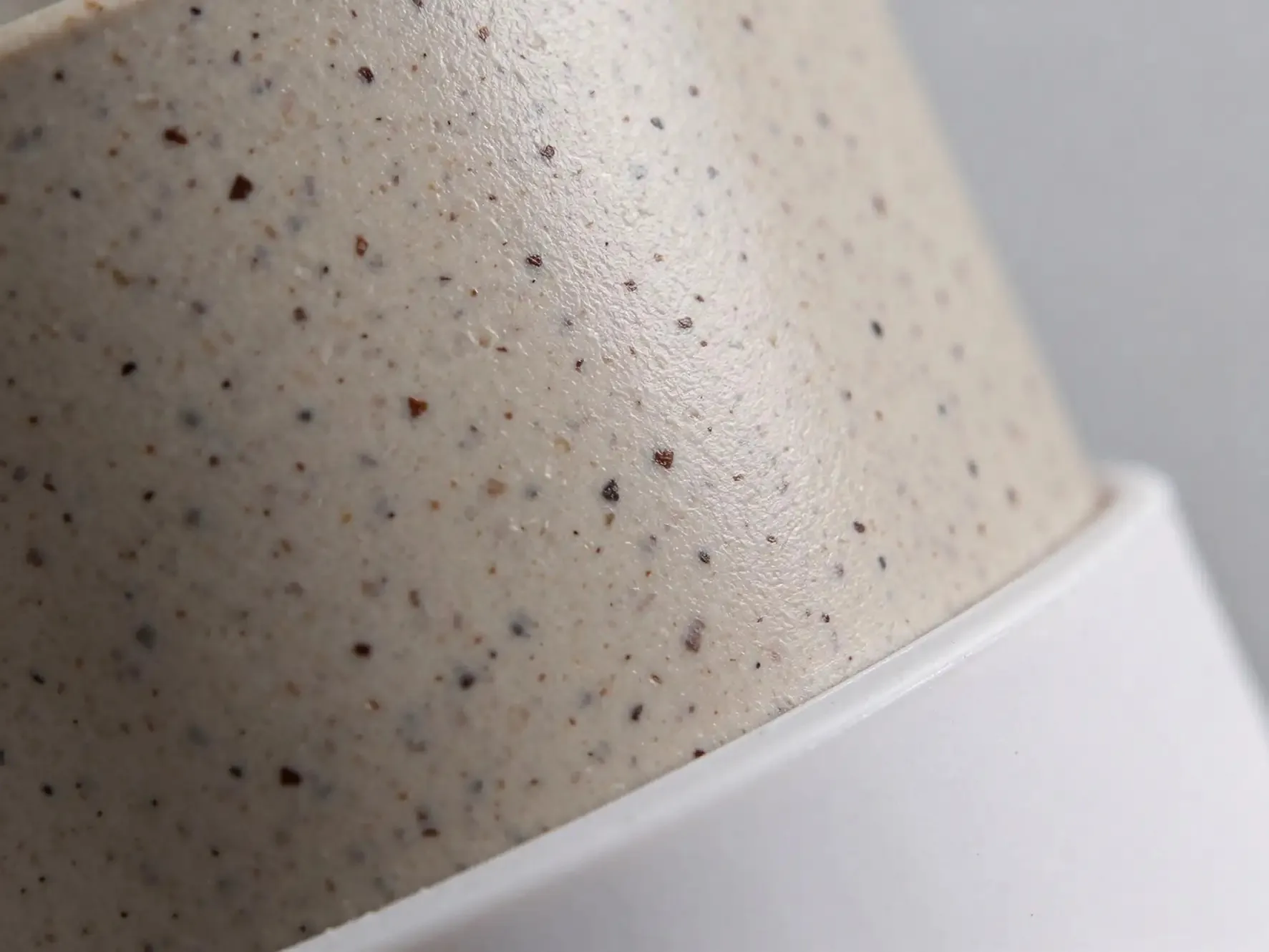
It gives the product a material story that is visible. The speckled surface is not a print — it is the filler showing through. Buyers in the café and promotional sector use that as a talking point, and it photographs well, which matters for brands that will resell the cup at retail.
What it does not do is make the cup biodegradable. See the compliance section below for the precise wording to use with customers.
The body and rim. The rim carries the lid seal and takes the most wear. A rolled or thickened rim holds shape better than a straight wall, and it is the difference between a lid that clicks shut in month twelve and one that leaks in month three.
The silicone lid. A food-grade silicone gasket seated in a PP lid gives splash resistance without a screw thread that traps coffee residue. Silicone keeps its elasticity across the hot-cold cycle that a reusable cup goes through daily; cheaper TPE gaskets harden and stop sealing.
The silicone sleeve. The sleeve does two jobs — thermal insulation for hot drinks and grip for cold ones — and it hides condensation. A sleeve that is moulded to the cup profile rather than a straight band stays in place when the cup is wet, which is when most sleeves slip.
Capacity and proportions. The 350 ml size is the volume that fits a standard café small/regular and still sits in a car cup holder and a bike bottle cage. Taller, narrower bodies look more premium but tip more easily; wider bodies are more stable but do not fit cup holders. Decide the target channel before deciding the shape.
Silk-screen printing — best for one or two solid colours, high volume. Limits: simple artwork; fine detail fills in.
Pad printing — best for small logos on curved surfaces. Limits: limited colours per pass.
Heat-transfer / laser — best for multi-colour artwork, fine type. Limits: higher setup cost; per-unit cost falls with volume.
In-mould labelling — best for full-wrap designs, premium retail. Limits: requires a dedicated mould run.
Silicone sleeve printing — best for large graphics without touching the body. Limits: sleeve-only branding; body stays plain.
Colour is a separate decision from printing. The coffee-ground compound naturally runs from light taupe to dark espresso depending on loading and roast; if you need a specific Pantone match, the grounds loading has to be fixed first, then the pigment matched on top of that base. Buyers who ask for "any colour" and a Pantone number at the same time are usually quoted twice.
Packaging is the third lever: individual poly bag, kraft sleeve, printed gift box or retail-ready carton. For promotional distributors, a printed sleeve plus a belly band is usually the cheapest way to make a plain cup look like a branded gift.
A PP coffee grounds cup is not biodegradable and not compostable. PP is a durable polymer; blending in coffee grounds changes the filler content, the colour and the material story, but it does not make the cup break down in soil or in an industrial composting facility. Any supplier who describes this product as "biodegradable" or "compostable" is either confusing it with a PLA or bagasse product, or overstating the claim.
What the cup legitimately supports is a reduced-virgin-plastic claim: part of the polymer content is replaced by a recycled agricultural by-product, and the product is reusable over hundreds of cycles instead of single-use. That is a defensible statement in marketing copy and in a sustainability report, and it will survive scrutiny from a corporate procurement team.
If your brief genuinely requires compostability, the right products are PLA and bagasse tableware lines, not a PP composite. KANGHAO produces both families — including a 20oz bamboo fibre coffee cup with silicone lid in the same 350–600 ml format — and the correct answer depends on the end-of-life requirement your customer has committed to — not on which material sounds greener.
• FDA food-contact compliance for the PP compound and the silicone parts
• EU food-contact framework compliance (EU 10/2011) with migration test reports
• LFGB testing for the German market
• BPA-free declaration — PP is inherently BPA-free, but the declaration should be on file, not assumed
• REACH / RoHS statements for the colourants and any printing inks
Two practical notes. First, the coffee grounds themselves are a food-contact ingredient in the compound, so the filler supplier's spec sheet matters as much as the resin supplier's. Second, test reports are issued per formulation and per colour — a report for a natural-colour cup does not automatically cover a black-pigmented version, so ask for the report that matches the SKU you are ordering.
Ask also how documentation is handled per batch. A factory that issues a certificate of analysis against each production lot, showing the compound loading and the resin grade, gives your own compliance team something to file. A factory that can only produce a single report from two years ago is a risk you inherit at the first retail audit.
Stock colour, stock sleeve, no printing — the lowest entry point, suitable for testing a market or filling a small promotional run.
Stock mould, custom print — the most common B2B configuration. Setup is limited to printing plates or transfer film; per-unit cost drops sharply as volume rises.
Custom mould or in-mould labelling — for retail-branded programmes. Expect tooling lead time on top of production, and expect the tooling cost to be quoted separately.
Sampling follows the same logic: a stock-configuration sample can usually be produced quickly, while a printed or moulded sample needs artwork approval and a setup run first. When you request a quote, send the artwork file, the Pantone reference, the target quantity and the destination market in the same message — that single step removes most of the back-and-forth that stretches a two-week quote into a month.
Café and coffee chain retail. Sold alongside beans and brew gear, often with the café's own mark. Prioritise lid seal quality and a shape that stacks on a retail shelf.
Corporate ESG gifting. HR and sustainability teams buy these as onboarding or event gifts. Prioritise a material story that can be printed on the packaging, and a colour palette that matches corporate identity.
Promotional distributors. Volume-driven, artwork-heavy, deadline-driven. Prioritise print flexibility and packaging that survives shipping.
Hotel and office pantry programmes. Replacing disposable cups in a controlled environment. Prioritise dishwasher durability and a neutral colourway.
Private-label retail. Highest specification, highest documentation burden. Prioritise certification coverage, consistent speckle appearance between batches, and retail-ready packaging.
The specification differences are not cosmetic. A cup tuned for promotional volume — fast printing, thin packaging, lowest unit cost — will fail a retail programme on batch consistency and documentation, while a retail-grade cup is over-specified and over-priced for a 500-piece event order. Decide the channel first, then let the factory quote against it.
Ask for the compound spec, not just "eco material". A real supplier can state the coffee-ground loading percentage and the base resin grade.
Ask which certifications cover which SKU. Vague answers usually mean the report belongs to a different product.
Ask how the grounds are dried and milled. If the answer is vague, batch consistency will be a problem later.
Ask for a named reference in your channel. Café chains, promotional distributors and private-label brands have different failure modes; relevant experience shortens the learning curve.
Check whether they also make PLA and bagasse. A supplier with all three families will tell you honestly when your brief is better served by a different material — a supplier with only one will not.
Ask what happens when a batch fails. Colour drift, splay marks and lid-fit failures all happen in composite moulding. The difference between suppliers is whether the answer is a remould, a credit note, or a conversation that stalls the shipment.
If you are sourcing a custom reusable coffee cup and want a supplier who can quote, sample and produce without a chain of intermediaries, the sections below double as a specification checklist you can send to any manufacturer for comparison.
What Is a PP Coffee Grounds Cup?
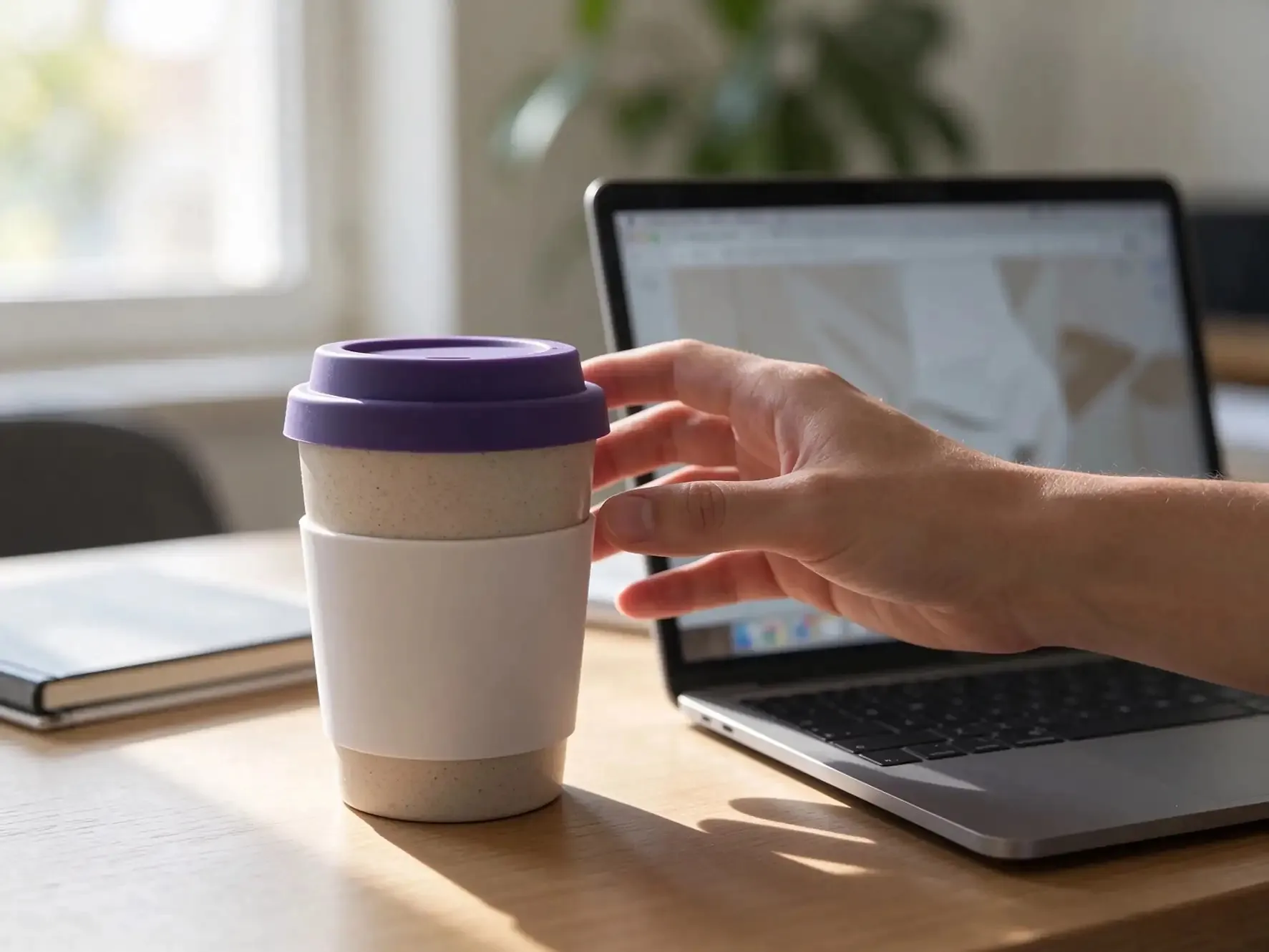
The body is made from polypropylene (PP) compounded with dried, milled coffee grounds, typically in a 10–30% loading by weight. The coffee grounds are a filler and a colourant at the same time: they give the cup a warm, slightly speckled brown-grey surface that cannot be reproduced by simply tinting virgin plastic.Mechanically, the compound behaves like a modified PP. It is lightweight, tough enough for daily commuting, resistant to the temperatures of hot coffee served at 85–95°C, and dimensionally stable enough that the lid thread does not loosen after hundreds of open-close cycles. The cup is a rigid reusable product, not a single-use item, and it is designed to be washed and refilled rather than discarded after one drink.
Two structural decisions separate a usable cup from a promotional giveaway. The first is wall thickness: below roughly 1.8 mm the cup feels hollow and the coffee cools too quickly. The second is the lid interface — a silicone-seated lid on a machined PP rim is what keeps the cup splash-resistant in a bag, and it is the part most often compromised when a buyer pushes unit cost down.
Why Coffee Grounds? The Material Logic Behind the Cup
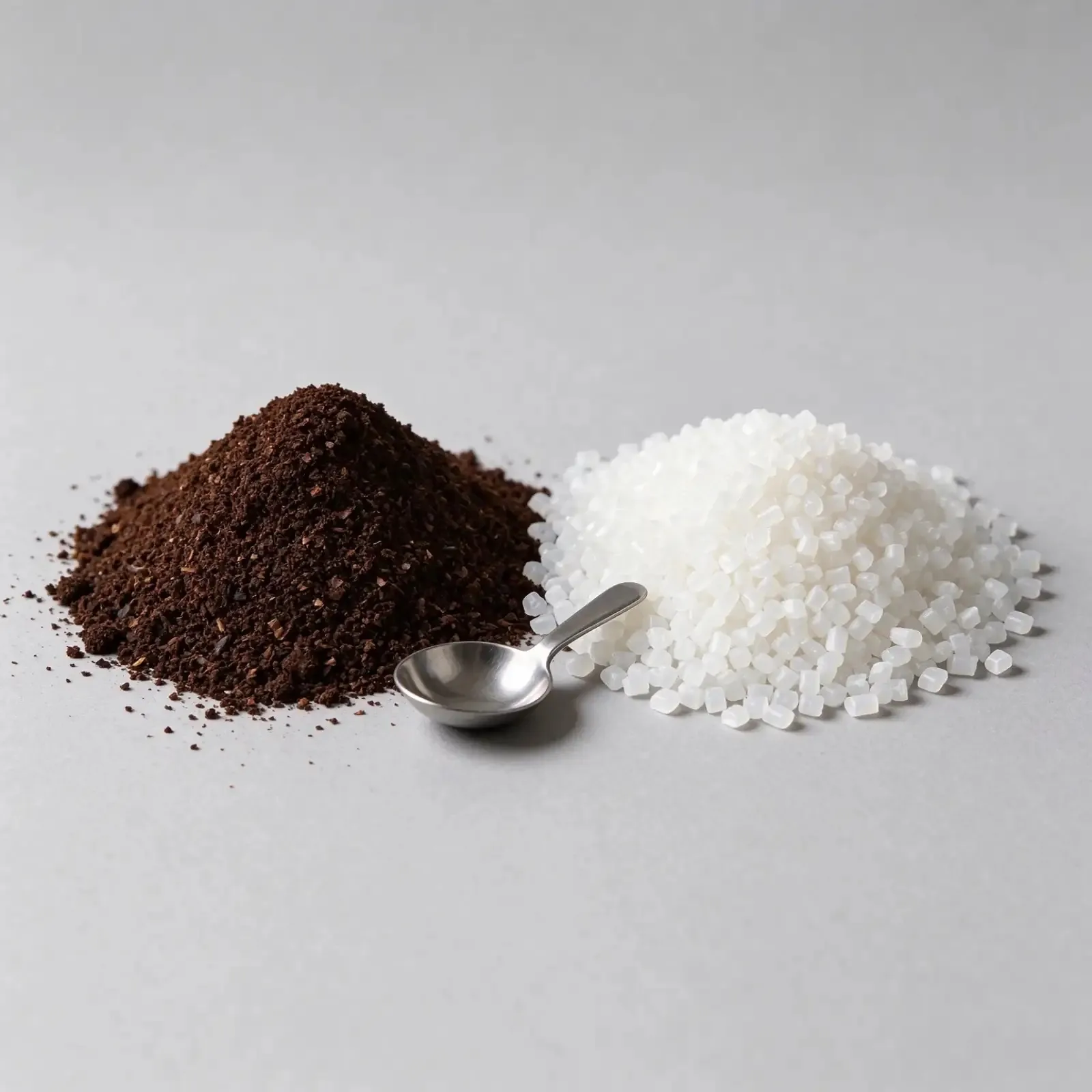
Spent coffee grounds are a high-volume waste stream: a single café can produce tens of kilograms per week, and most of it goes to landfill or incineration. Reusing them as a filler in PP does three concrete things.It displaces virgin polymer. Every kilogram of coffee grounds blended into the compound replaces a kilogram of petroleum-based plastic. At a 20% loading, a 350 ml cup body carries roughly one-fifth less virgin PP than an all-plastic equivalent of the same dimensions.
It reuses a waste stream locally. Grounds are collected, dried to a low moisture content and milled to a consistent particle size before compounding. Moisture control matters: residual water causes splay marks and weak weld lines in the moulding, which is why drying is the step that separates a stable production run from a batch of cosmetically inconsistent cups.
It gives the product a material story that is visible. The speckled surface is not a print — it is the filler showing through. Buyers in the café and promotional sector use that as a talking point, and it photographs well, which matters for brands that will resell the cup at retail.
What it does not do is make the cup biodegradable. See the compliance section below for the precise wording to use with customers.
Design Details That Decide Daily Use
Four components determine whether the cup survives a year of real use.The body and rim. The rim carries the lid seal and takes the most wear. A rolled or thickened rim holds shape better than a straight wall, and it is the difference between a lid that clicks shut in month twelve and one that leaks in month three.
The silicone lid. A food-grade silicone gasket seated in a PP lid gives splash resistance without a screw thread that traps coffee residue. Silicone keeps its elasticity across the hot-cold cycle that a reusable cup goes through daily; cheaper TPE gaskets harden and stop sealing.
The silicone sleeve. The sleeve does two jobs — thermal insulation for hot drinks and grip for cold ones — and it hides condensation. A sleeve that is moulded to the cup profile rather than a straight band stays in place when the cup is wet, which is when most sleeves slip.
Capacity and proportions. The 350 ml size is the volume that fits a standard café small/regular and still sits in a car cup holder and a bike bottle cage. Taller, narrower bodies look more premium but tip more easily; wider bodies are more stable but do not fit cup holders. Decide the target channel before deciding the shape.
Customization: Logo, Color and Packaging Options
Customization is where most B2B orders are won or lost, and it is worth being specific with a supplier about what method you want.Silk-screen printing — best for one or two solid colours, high volume. Limits: simple artwork; fine detail fills in.
Pad printing — best for small logos on curved surfaces. Limits: limited colours per pass.
Heat-transfer / laser — best for multi-colour artwork, fine type. Limits: higher setup cost; per-unit cost falls with volume.
In-mould labelling — best for full-wrap designs, premium retail. Limits: requires a dedicated mould run.
Silicone sleeve printing — best for large graphics without touching the body. Limits: sleeve-only branding; body stays plain.
Colour is a separate decision from printing. The coffee-ground compound naturally runs from light taupe to dark espresso depending on loading and roast; if you need a specific Pantone match, the grounds loading has to be fixed first, then the pigment matched on top of that base. Buyers who ask for "any colour" and a Pantone number at the same time are usually quoted twice.
Packaging is the third lever: individual poly bag, kraft sleeve, printed gift box or retail-ready carton. For promotional distributors, a printed sleeve plus a belly band is usually the cheapest way to make a plain cup look like a branded gift.
What "Eco-Friendly" Actually Means Here — and What It Does Not
This is the part where suppliers and buyers most often mislead each other, so it is worth stating plainly.A PP coffee grounds cup is not biodegradable and not compostable. PP is a durable polymer; blending in coffee grounds changes the filler content, the colour and the material story, but it does not make the cup break down in soil or in an industrial composting facility. Any supplier who describes this product as "biodegradable" or "compostable" is either confusing it with a PLA or bagasse product, or overstating the claim.
What the cup legitimately supports is a reduced-virgin-plastic claim: part of the polymer content is replaced by a recycled agricultural by-product, and the product is reusable over hundreds of cycles instead of single-use. That is a defensible statement in marketing copy and in a sustainability report, and it will survive scrutiny from a corporate procurement team.
If your brief genuinely requires compostability, the right products are PLA and bagasse tableware lines, not a PP composite. KANGHAO produces both families — including a 20oz bamboo fibre coffee cup with silicone lid in the same 350–600 ml format — and the correct answer depends on the end-of-life requirement your customer has committed to — not on which material sounds greener.
Certifications, Testing and Food-Contact Compliance
For food-contact drinkware sold into the EU, US and Japan, the documents buyers should request are:• FDA food-contact compliance for the PP compound and the silicone parts
• EU food-contact framework compliance (EU 10/2011) with migration test reports
• LFGB testing for the German market
• BPA-free declaration — PP is inherently BPA-free, but the declaration should be on file, not assumed
• REACH / RoHS statements for the colourants and any printing inks
Two practical notes. First, the coffee grounds themselves are a food-contact ingredient in the compound, so the filler supplier's spec sheet matters as much as the resin supplier's. Second, test reports are issued per formulation and per colour — a report for a natural-colour cup does not automatically cover a black-pigmented version, so ask for the report that matches the SKU you are ordering.
Ask also how documentation is handled per batch. A factory that issues a certificate of analysis against each production lot, showing the compound loading and the resin grade, gives your own compliance team something to file. A factory that can only produce a single report from two years ago is a risk you inherit at the first retail audit.
MOQ, Sampling and Lead Times for Wholesale Orders
Order structure varies by customization level, and it is better to plan around three tiers than to ask for a single number.Stock colour, stock sleeve, no printing — the lowest entry point, suitable for testing a market or filling a small promotional run.
Stock mould, custom print — the most common B2B configuration. Setup is limited to printing plates or transfer film; per-unit cost drops sharply as volume rises.
Custom mould or in-mould labelling — for retail-branded programmes. Expect tooling lead time on top of production, and expect the tooling cost to be quoted separately.
Sampling follows the same logic: a stock-configuration sample can usually be produced quickly, while a printed or moulded sample needs artwork approval and a setup run first. When you request a quote, send the artwork file, the Pantone reference, the target quantity and the destination market in the same message — that single step removes most of the back-and-forth that stretches a two-week quote into a month.
Where This Cup Sells: Five Commercial Use Cases
The same product carries very different margins depending on channel, and the specification should follow the channel.Café and coffee chain retail. Sold alongside beans and brew gear, often with the café's own mark. Prioritise lid seal quality and a shape that stacks on a retail shelf.
Corporate ESG gifting. HR and sustainability teams buy these as onboarding or event gifts. Prioritise a material story that can be printed on the packaging, and a colour palette that matches corporate identity.
Promotional distributors. Volume-driven, artwork-heavy, deadline-driven. Prioritise print flexibility and packaging that survives shipping.
Hotel and office pantry programmes. Replacing disposable cups in a controlled environment. Prioritise dishwasher durability and a neutral colourway.
Private-label retail. Highest specification, highest documentation burden. Prioritise certification coverage, consistent speckle appearance between batches, and retail-ready packaging.
The specification differences are not cosmetic. A cup tuned for promotional volume — fast printing, thin packaging, lowest unit cost — will fail a retail programme on batch consistency and documentation, while a retail-grade cup is over-specified and over-priced for a 500-piece event order. Decide the channel first, then let the factory quote against it.
How to Evaluate a Coffee Cup Supplier
A short checklist that separates a real manufacturer from a trading company:Ask for the compound spec, not just "eco material". A real supplier can state the coffee-ground loading percentage and the base resin grade.
Ask which certifications cover which SKU. Vague answers usually mean the report belongs to a different product.
Ask how the grounds are dried and milled. If the answer is vague, batch consistency will be a problem later.
Ask for a named reference in your channel. Café chains, promotional distributors and private-label brands have different failure modes; relevant experience shortens the learning curve.
Check whether they also make PLA and bagasse. A supplier with all three families will tell you honestly when your brief is better served by a different material — a supplier with only one will not.
Ask what happens when a batch fails. Colour drift, splay marks and lid-fit failures all happen in composite moulding. The difference between suppliers is whether the answer is a remould, a credit note, or a conversation that stalls the shipment.
Frequently Asked Questions
Is a coffee grounds cup dishwasher safe?
The PP body and silicone parts tolerate normal dishwasher cycles. Hand washing extends the life of the print, especially for heat-transfer artwork.
Can the cup hold hot coffee?
Yes. The PP compound is stable at typical serving temperatures, and the silicone sleeve is there to protect the hand rather than the cup.
What is the minimum order quantity?
It depends on configuration: stock-colour cups without printing have the lowest entry point, while custom moulds and in-mould labelling require a larger run. Send your target quantity and we will confirm what is achievable at that level.
Does the coffee grounds content affect the taste?
No. The grounds are fully encapsulated in the polymer matrix; the inner surface is the same food-contact PP as any standard cup.
Can you match our brand colour exactly?
Yes, once the grounds loading is fixed. The compound sets the base tone, and the pigment is matched on top of that base.
Is the cup recyclable?
The PP body is a mono-material polypropylene stream and can go into standard PP recycling where that stream is accepted. Coffee-ground filler content should be declared to the recycler. Check local acceptance rules before making a recyclability claim in your market.
KANGHAO (深圳市康濠实业有限公司) manufactures PP coffee grounds cups, PLA tableware and bagasse food packaging for B2B buyers. Send your specification, artwork and target quantity for a quote and a sample plan.
KANGHAO (深圳市康濠实业有限公司) manufactures PP coffee grounds cups, PLA tableware and bagasse food packaging for B2B buyers. Send your specification, artwork and target quantity for a quote and a sample plan.