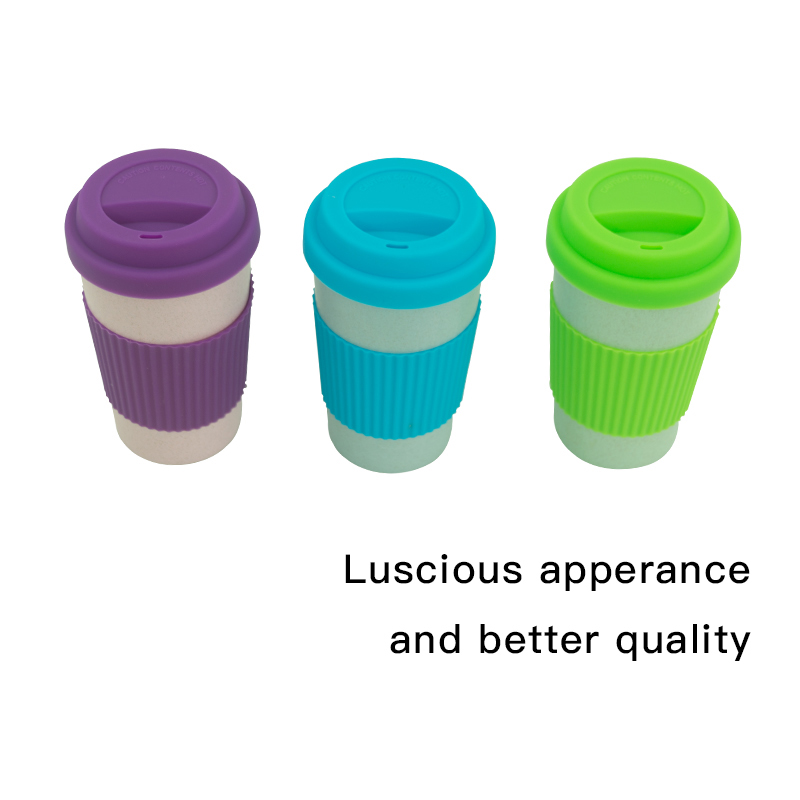
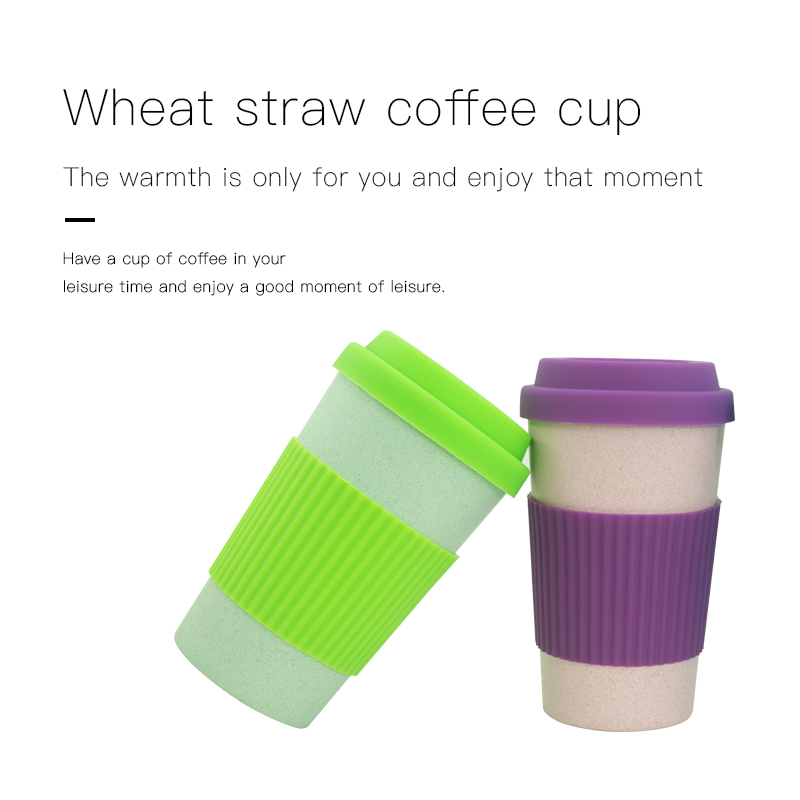
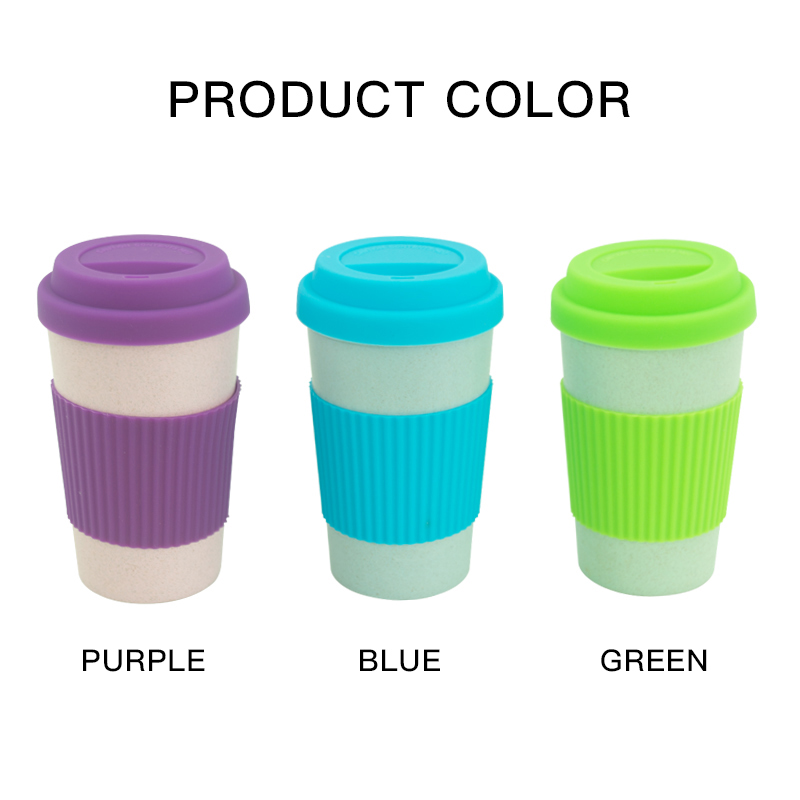
Cup characteristics
1. The environmentally friendly wheat straw material is healthy, safe and hygienic,
non-toxic and tasteless, and can be used with confidence.
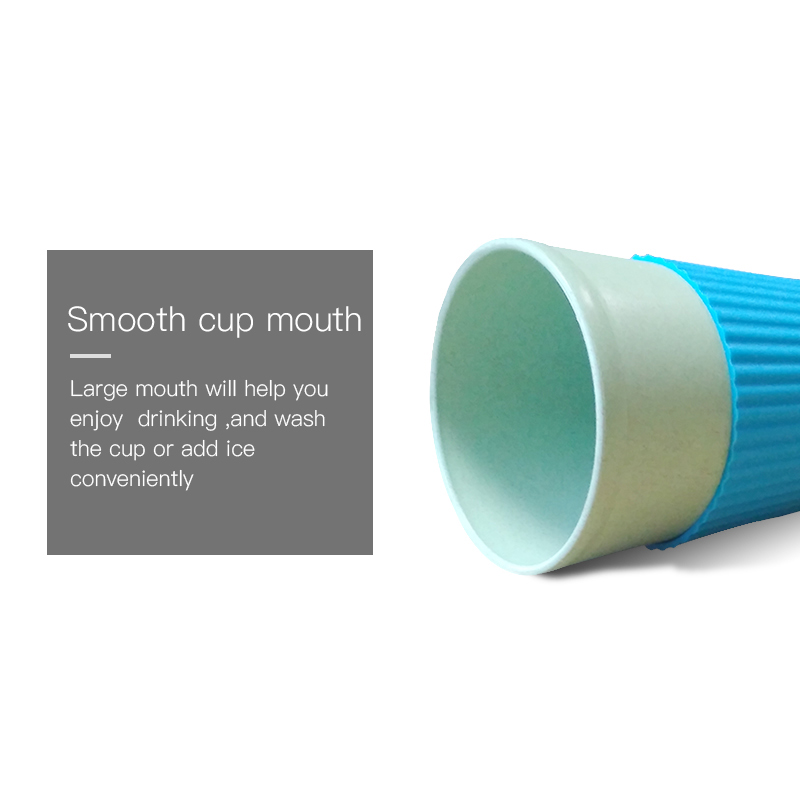
2. The cup body is smooth, delicate and comfortable.
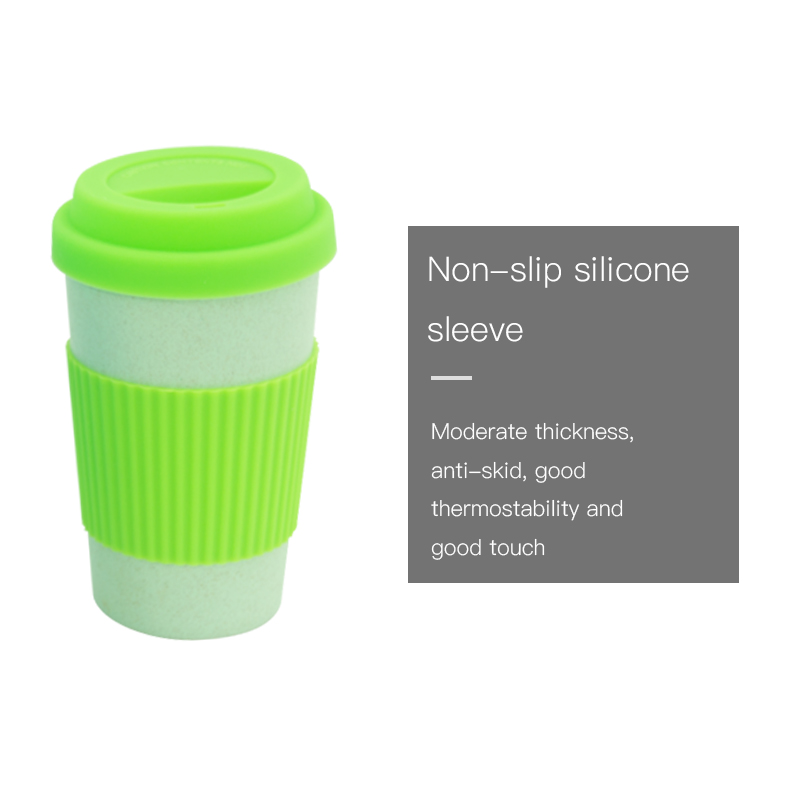
3. The silicone lid is soft and durable, resistant to high and low temperatures without deformation.
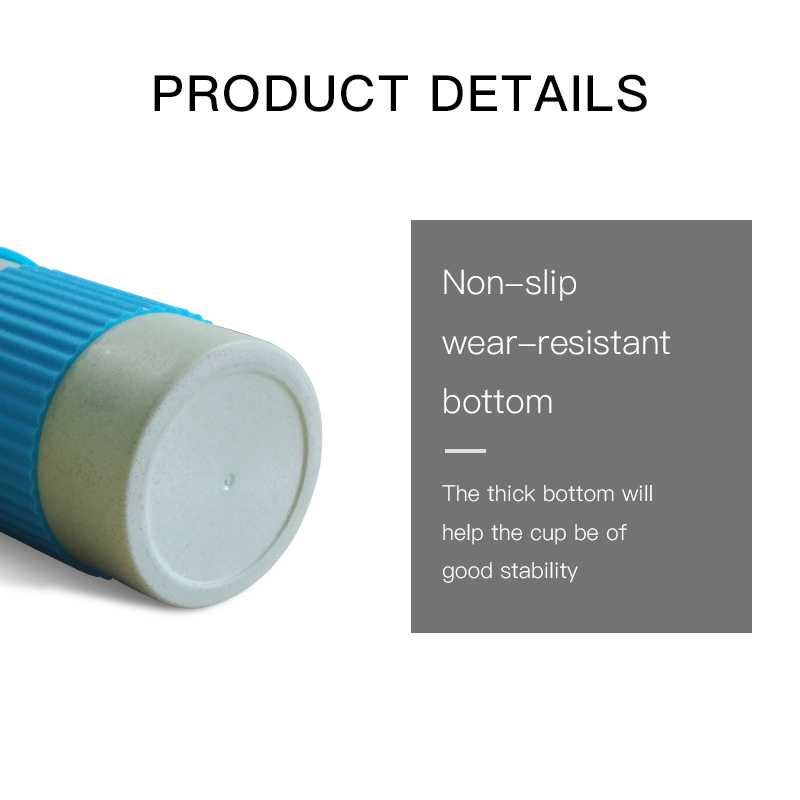
4. The bottom non-slip design is placed stably.
5. The material is soft, resistant to falling and abrasion, recyclable and long life.
6. The silicone cup cover is heat-insulating and anti-scalding, detachable, easy to use.

Straw is the general term for the stem and leaf (ear) part of a mature crop.Usually refers to wheat, rice,
corn, potato, cotton, sugar cane and other crops (usually coarse grains) after the seed is harvested.
Wheat straw is a kind of synthetic compound which can be naturally degraded and pollution-free.
The straw or wheat straw is crushed first, then the mold is formed after drying, adding adhesive,
entering the mold and heating in the heating furnace.Can make full use of agricultural waste,
reduce the cost of packaging board, no pollution, can also be used for
chemical fiber products packaging partitions, pallets, instead of filament paper tube.
One、Material advantages of wheat straw:
1.straw, green environmental protection tableware, plant fiber environmental protection tableware,
is the main raw material is wheat straw, rice straw, rice husk, corn straw, reed stem, bagasse,
such as natural plant fiber regeneration, products are natural plant raw materials,
production process of natural high temperature disinfection,
the production process without liquid and harmful gas and waste residue pollution,
buried in the soil after use, three months into natural degradation of organic fertilizer.
2. Straw fiber tableware greatly reduces the production cost of products,
and the price of disposable plastic tableware is much higher than that of biodegradable raw materials.
3, straw straw, wheat straw, corn straw, cotton straw and so on, inexhaustible,
not only for the conservation of non-renewable resources, but also for the conservation of wood, food resources.
At the same time, it can effectively alleviate the serious air pollution caused by farmland burning waste crops
and the serious white pollution and damage caused by plastic waste to the natural and ecological environment.