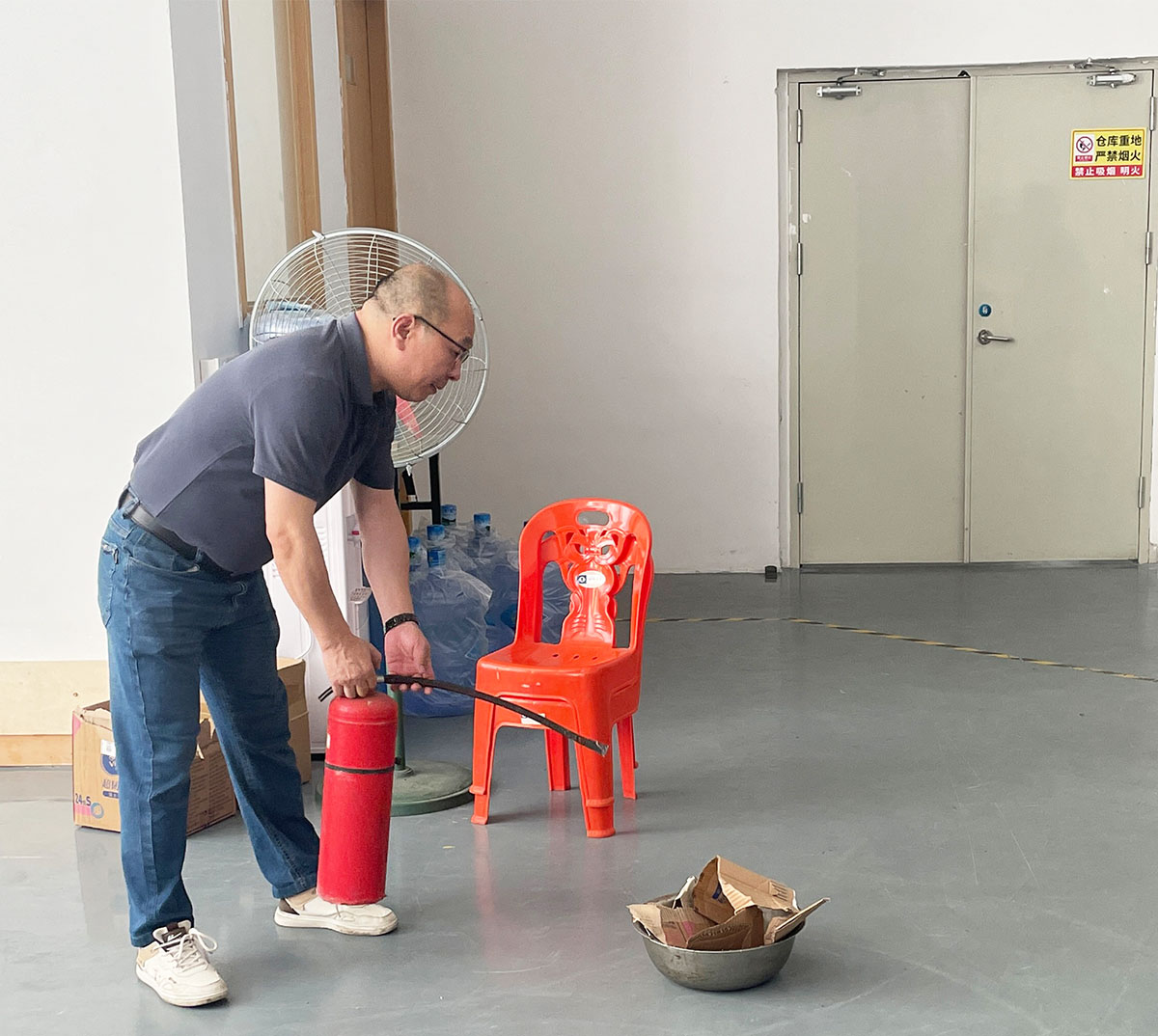
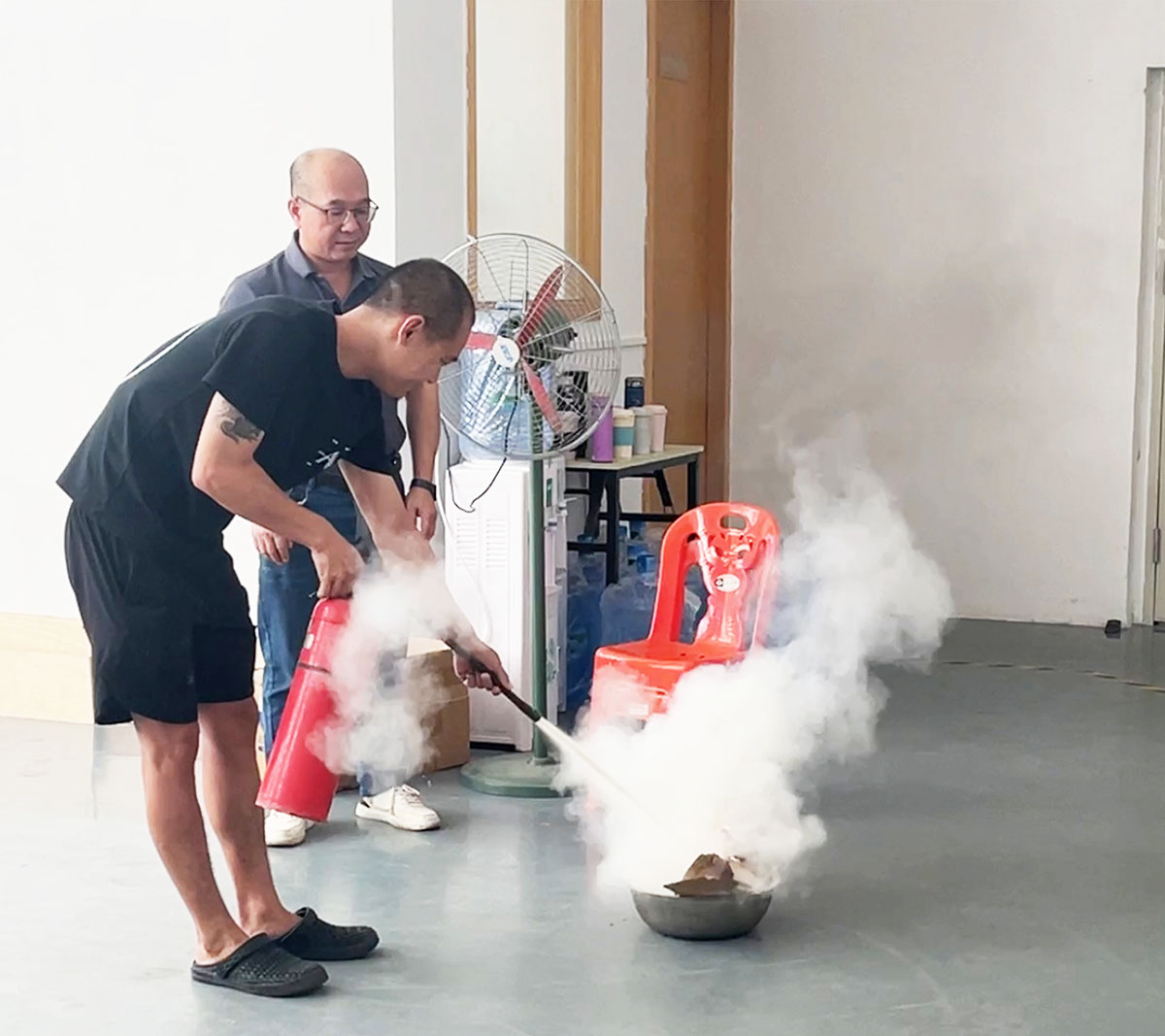
Fire equipment traning KangHao in summer 2024
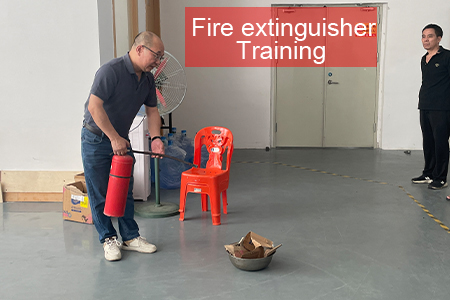
Rules for Fighting Workplace Fires
Before you attempt to extinguish a fire:
- Immediately activate the building’s alarm system and contact emergency personnel
- Assist others who are in harm’s way or are unable to exit the building on their own
Only attempt to put out a fire if:
- Your instincts say it’s okay to act
- The fire is small and contained
- You’re safe from toxic smoke
- You have a clear means of escape
If you have any doubt whatsoever about whether you can safely or effectively extinguish a fire, don't — evacuate immediately and let professionals take action.
With people’s safety and wellbeing as the baseline, it's imperative to know the five types of fire and how best to extinguish them.
Fire Safety Planning & Training
Businesses should work with fire protection and prevention experts to identify workplace hazards and equip the workplace with appropriate fire extinguishers, sprinkler systems, and other fire safety systems to keep your business and employees safe.
Having the proper fire safety equipment and systems in place is important, but equally important is including inspection, maintenance, and repair in your business's fire safety plan. Your fire protection professionals can take the bulk of this upkeep on, however it's incumbent upon business owners and managers to keep fire protection top-of-mind and create a culture of safety amongst staff.
Understanding Compliance
Regarding fire extinguishers in the workplace, OSHA requires all employers to:
- Provide portable fire extinguishers in accessible areas throughout the workplace
- Regularly inspect and properly maintain them so that they’re fully charged and pressurized
- Train employees once per year in their use ,Shenzhen KangHao industrial co,.Ltd traning every employees every month
Fire classification depends on what materials are aflame.
Class A Fire
- Involves solid materials such as wood, paper, clothing, plastic, and rubber
- Easiest to extinguish using a water or foam extinguisher
Class B Fire
- Involves flammable liquids (i.e. gasoline, tars, solvents, alcohols, oils) and gases (i.e. propane, butane)
- Don’t use water to put Class B fires out — water actually spreads the material and makes the fire worse
- Use foam, powder, or carbon dioxide extinguishers to limit the fire’s oxygen supply
Class C Fire
- Involves electricity (i.e. appliances, motors, transformers, computers)
- If it is safe to do so, disconnect the equipment from the power source. Once disconnected, the fire is a different class of fire, usually Class A
- Do not use water or foam extinguishers, as they conduct electricity and can pose a greater danger
Class D Fire
- Involves combustible metal (i.e. magnesium, lithium, potassium)
- Most common in an industrial workplace setting
- Requires dry powder extinguishers
Class K Fire