


In today’s world, plastic can be seen everywhere. Plastic bags, plastic basins, plastic hangers, plastic tablecloths, plastic carpets, plastic sandals, plastic raincoats, plastic flowers, etc., are colorful in red, orange, yellow, green, blue, blue and purple. . However, once plastic products are damaged, it is very difficult to dispose of these plastic garbage.
Chemical experts point out that plastics, which are polymer compounds, take 200 to 400 years to decompose. The seriousness of the problem is that if plastic products such as plastic bags or disposable fast food boxes are discarded or buried in the soil, it will hinder the growth of crops. According to calculations, 4 kilograms of plastic waste per mu of land will reduce the yield of corn by 11-23%, wheat by 10-16%, soybean by 6-10%, and vegetable by 15-60%.
In our country, in the past two to three years, hundreds of thousands of tons of waste boxes and waste films have remained in farmland across the country. In 1994 alone, the total surface area of plastic tableware used in my country reached 335 square kilometers. According to this calculation, one Singapore can be covered in two years. If these plastic tableware are mistakenly eaten by livestock, the digestive system may get sick and the serious ones may die. Throwing plastic garbage into the ocean and being swallowed by fish will have the same consequences. If plastic waste is incinerated, a large amount of toxic gas will be released.
In modern life, waste plastic has become the enemy of mankind and the environment, forming the so-called "white pollution". The harmless treatment of plastic waste has become a hot research topic in the world today. With the improvement of living standards, people's resistance to "plastic (material)" or "chemical (learning)" of food packaging is becoming stronger and stronger. To this end, many countries and regions have promulgated laws and regulations prohibiting the use of plastic products to package food, and actively use chemical technology to trial-produce a large number of new types of decomposable plastics or substitutes.
Regarding the decomposition of plastics, there are currently two main ways: one is to decompose by microorganisms in the soil; the other is to break the polymer chain through the action of sunlight, and finally turn into carbon dioxide and water.
Under contemporary scientific and technological conditions, there are three production methods for decomposable plastics: one is to use microbial production; the other is to use wood and residues of agricultural and forestry processing industries to produce; the third is to produce by chemical synthesis. Although the production cost of decomposable plastics is still relatively high, because it does not cause environmental pollution, many countries have already invested in small batch industrial production. In the late 1980s, the consumption of decomposable plastics in the United States was 137,000 tons, most of which were used as packaging materials.
A chemical company in Britain invented a new type of decomposable plastic. This new type of plastic not only has the advantages of some previous plastics, that is, it is durable, stable and waterproof, but also like many organic substances in nature, it can quickly and effectively decompose into carbon dioxide and water that are harmless to people and the environment.
American DuPont Chemical Company has successfully developed a decomposable plastic, which is made from renewable resources such as cheese whey and corn. In the presence of moisture, air and fungi, cheese whey and corn can be decomposed into water and carbon dioxide in about half a year. This type of new plastic products are ideal for tableware or packaging materials in the fast food industry and the food industry.
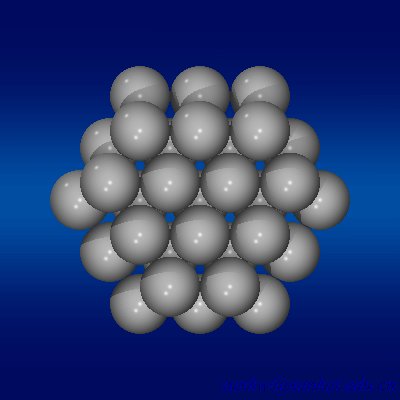
A photodegradable plastic has also been produced abroad, which has a slightly green appearance and can be used as a loose filling material in a packaging box. After the plastic is exposed to sunlight, it turns into powder.
At present, some experts have different opinions on soluble plastics including starch plastics. They believe that the decomposition process of these plastics is not so ideal. After half a year, 75-95% of the plastic still remains palm-sized lumps; some toxic wastes will also be released during the decomposition process; the synthesis method of this plastic is complicated ,higher cost.
Even if the road to the future is difficult, we must cross the barriers to develop more new biodegradable environmentally friendly materials to replace traditional plastic materials, so that our environment can be protected to the utmost extent.